
38. Mother Trees and Forestry Practices — with Dr. Suzanne Simard
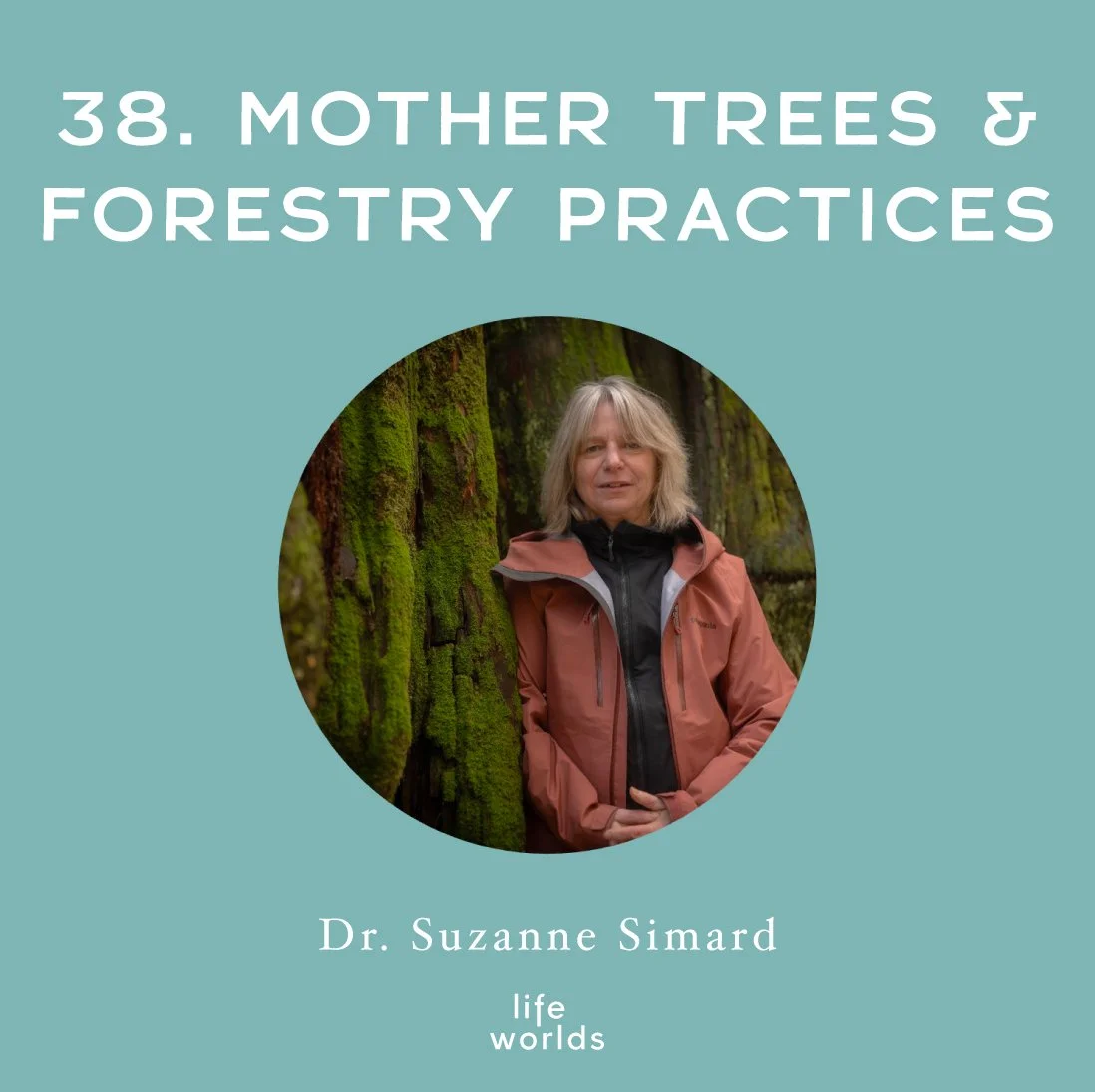
“It's completely legal to clear-cut the forests of British Columbia. In fact, it's against forest policy not to harvest the forests of British Columbia. We need to change the laws, and we need to change them even more so that the forest has rights.”
- Dr. Suzanne Simard
SYNOPSIS:
This episode is a live interview with Dr. Suzanne Simard at the MOTH Festival of Ideas in London. Suzanne is the forest ecologist whose researched popularised notions of the Wood Wide Web and the Mother Trees, and revealed the living networks that wire a forest together to share carbon, water and resources. We talk about the courage it took to call a tree "mother," the grizzly encounters and burned-down research plots behind the tidy data, and the findings from her Mother Tree Project and luminous new book, When the Forest Breathes - chief among them, that a forest, given half a chance and a few elders left standing, knows exactly how to breathe its way back to life.
GUEST BIO:
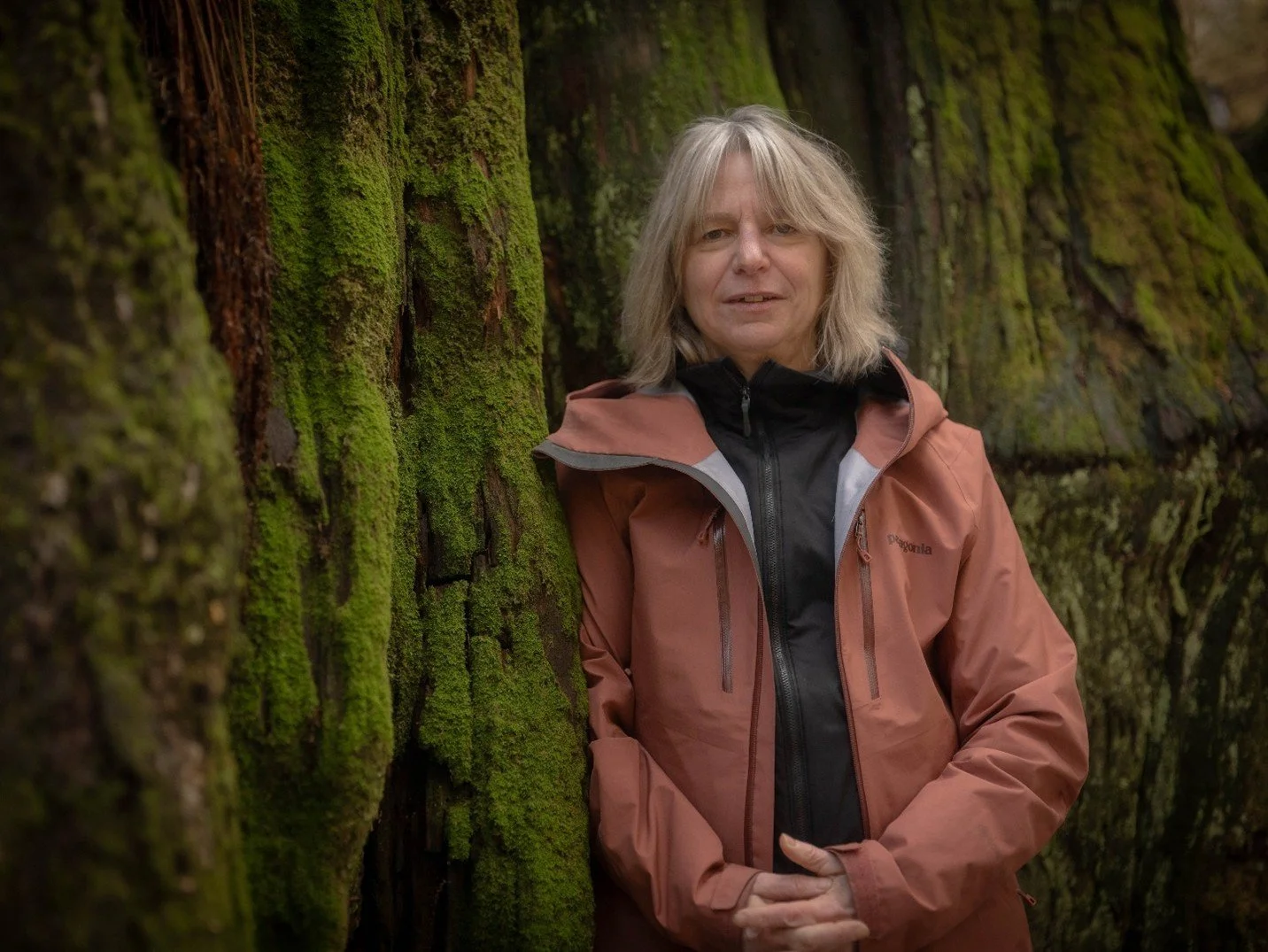
Dr. Suzanne Simard is a professor of forest ecology at the University of British Columbia, Canada. She conducts research in collaboration with First Nations people in examining the effects of forestry practices and climate change on ecosystems. She is known for her pioneering research on underground fungal networks and intertree communication, publishing her first article in this field in Nature in 1997. She has since published over 200 scientific journal articles and is author of the NYT best selling books, ‘Finding the Mother Tree’, and ‘When the Forest Breathes’. She has earned various awards for her work, including the Canadian Forestry Scientific Achievement Award and Kew International Medal in 2023, and she was named one of the TIME 100 most influential people in 2024. For her adventuresome field research, she has earned the nickname, “Indiana Jones of trees.”
QUOTES:
The mother trees are trying to tell us: “We are the energy centers of the forest. We are the genetic future of these forests.”
The response from the public has been incredible because I think that they feel heard, in a sense — that the voice that is inside of them has been listened to.
We're finding that even after three years, when we've lost 60% of the forest floor, some of that has come back within three years. That's the more-than-human world doing its good work.
A thick bed of salmon. The bears have taken it in there. And then what happens to that decaying salmon is it decays and seeps into the soil, and then the mycorrhizal network, or the mycelium, picks up those nutrients and delivers them right into the tree. So these trees are full of salmon. So is the soil.
So then you go, "Okay, well, what do we do next?" You did the science, you wrote the book, you put your name out there, you got backlash. And then, okay, you try to move the economy, you talk to the politicians. Well, what do you have left? You go put your body on the line, right? You go protest.
It's completely legal to clear-cut the forests of British Columbia. In fact, it's against forest policy not to harvest the forests of British Columbia. We need to change the laws, and we need to change them even more so that the forest has rights.
Over half of the ancient underground carbon pool — accumulated over thousands of years — instantly disappears with logging, and old trees hold in their genes the legacy of the past. Some trees may still stand and resemble a forest, but it is a shell of its former self and could take centuries to recover.
The landscape felt like a graveyard. No bird sang, no leaves trembled in the breeze. Creeks were choked with soot. I felt a hollowness in my chest — a million wild voices had been silenced. A zombie fire that would continue to burn through the winter.
LINKS:
YOU MAY ALSO LIKE

![[Full Length] Unexpected Agricultures — with Lyla June Johnston](https://images.squarespace-cdn.com/content/v1/61e5960411275129ba0c607d/1658128435444-KBCFLKI45Y754WXVUYCZ/Agriculture-Lyla.jpg)
![[Full Length] Unexpected Agricultures — with Michael Ableman](https://images.squarespace-cdn.com/content/v1/61e5960411275129ba0c607d/1658129338344-U3GK0WTQJL9YQU1DIPVK/Agriculture-Michael.jpg)