
“If we can pay attention, our individual stories can be embedded in this much broader, more grounded and expansive story of the rest of the universe: of which we are members, part of the story.”
- Adam Frank
SYNOPSIS:
What is life, and are we alone in the universe?
In this episode I sit down with Adam Frank, Professor of Astrophysics at the University of Rochester, prolific science communicator, and author of five books including The Blind Spot and The Little Book of Aliens. Adam is one of the most compelling voices working at the intersection of astrobiology, philosophy, and the human future.
We journey from the stunning variety of exoplanets we're only beginning to map, to the deep questions on detecting life in space. Adam argues that the search for extraterrestrial life can't be separated from the question of what life means here on Earth. Astrobiology, it turns out, may be our most useful mirror for understanding our own civilisational moment.
We also get into the hard problem of consciousness, the blind spot at the heart of modern science, and how cosmology like art and myth — can be a gateway to awe. A conversation that leaves you more at home in the strangeness of the universe and probably less certain about what “alive” even means.
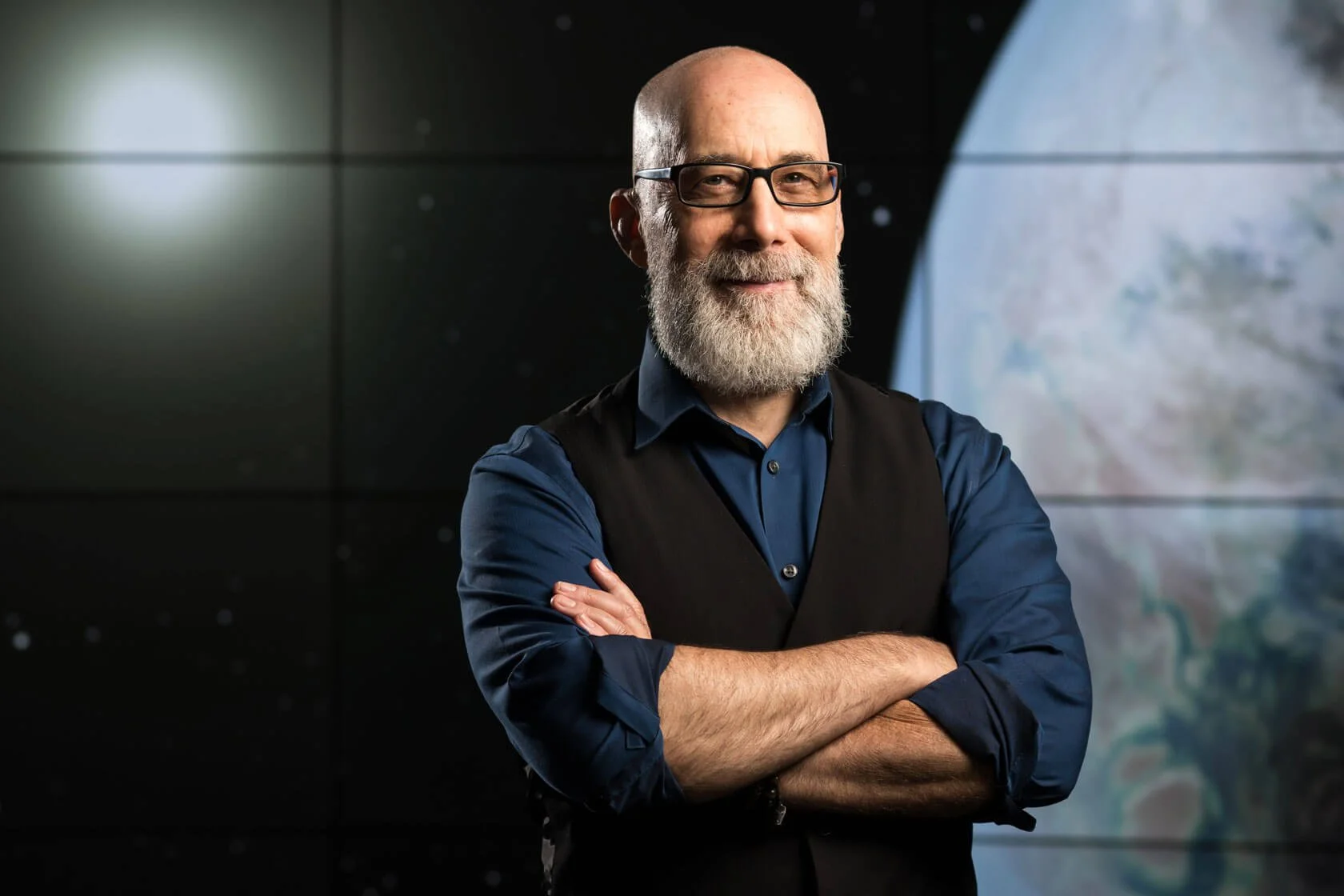
GUEST BIO:
Adam Frank is the Helen F. and Fred H. Gowen Professor of Astrophysics at the University of Rochester, where he has been a faculty member since 1996.
His computational research group at the University of Rochester developed advanced supercomputer tools for studying how stars form and how they die, and he is a leading expert on the final stages of stellar evolution for stars like our sun. His research has since expanded far beyond stellar physics — encompassing exoplanet atmospheres, astrobiology, and what he calls the study of exo-civilizations — the generic response of planets to the evolution of energy-intensive technological life.
A self-described "evangelist of science," Adam is committed to showing others the beauty and power of science and exploring its proper context in culture. He is one of the most prominent science communicators working today. He was co-founder of NPR's 13.7: Cosmos and Culture blog, which ran for seven years, and is a regular commentator on NPR's All Things Considered, as well as a contributor to The New York Times, The Atlantic, and other major outlets. He currently writes the 13.8 column on BigThink.
He has authored five books. The Constant Fire examined the deep relationship between science and spiritual experience. About Time explored how cosmology and culture shape each other through the human experience of time. Light of the Stars: Alien Worlds and the Fate of the Earth reframed climate change as a universal challenge facing any technological civilisation — it won the 2019 National Honor Society Best Book in Science. The Little Book of Aliens is his definitive guide to the scientific search for extraterrestrial life. His most recent book, The Blind Spot, co-authored with philosopher Evan Thompson, argues that modern science has an unexamined philosophical assumption at its foundations — that a complete account of reality can leave out the experiencer — and that addressing this blind spot is essential not just philosophically but for how we approach everything from consciousness to climate.
Frank has developed a framework classifying planetary atmospheres into five classes, from barren to fully technosphere-integrated, arguing that Earth currently sits between Class 4 and 5 — and that we don't yet know if we make it to a sustainable Class 5. This framing — astrobiology as a mirror for understanding our own civilisational choices — is perhaps his most distinctive and urgent contribution to the field.
He has appeared on the Joe Rogan Experience, the Lex Fridman Podcast, Netflix's Alien Worlds, National Geographic's Mars, and the History Channel's The Universe, among many others.
QUOTES:
"We have found evidence for an entirely new class of ocean worlds: a world maybe five or six times the size of Earth, with maybe eight times its mass, and an ocean so deep it may extend down 700 miles. The deepest part of Earth's ocean is only six miles."
"There is a stunning variety of circumstances and stories that all of these exoplanets provide for life. Yet 30 years ago, we didn't even know whether there were any planets in the universe other than the ones orbiting the sun!"
"The process of evolution is really a logic. Not something tied to specific forms of chemistry, carbon-based chemistry, or using water as a solvent. Evolution is really a logic of competition."
"What makes life unique as a physical system, compared to rocks or volcanoes or comets, is its self-organization: the relationship between all of its processes. Life is a process that is able to refer back to itself. We're looking for a kind of system that has self-organized itself such that it is able to parse meaning out of its environments."
"I'm more interested in sentience than intelligence, because I think every microbe has a fundamental quality of sentience. And without sentience, there's no intelligence. The real mystery is sentience. Sentience is about being an agent — an autonomous, self-directed, self-creating, self-maintaining agent."
"Across the sciences there's a real willingness now to start asking these kinds of questions in different ways: still scientifically principled ways, but without that default to the blind spot philosophies of naive realism and mechanism."
"What's important about phenomenology is you have to start with experience. You are always already embedded in experience. You have to be an experiencing agent in a community of experiencing agents before you can ever have that story you want to tell yourself about a universe and galaxies."
"The world comes into being in the form that it does because of us. It's a co-creation, co-constitution of environment and agent, self and world."
"No matter what kind of life occurs in the universe, it's going to have to be moving information around and using information to make sense of itself and its world."
"If Earth goes, everything goes. The idea that there's a Planet B is just bad science fiction."
"The question is not to save the Earth. The biosphere is not a furry little bunny that we need to protect. Instead, we need to be afraid of the Earth. Gaia is a kind of god — it literally channels cosmic power."
"What we need to do is develop a mature technosphere that is integrated with the biosphere and the rest of the planet."
"If we were to build a settlement on Mars and eventually there's a billion people living there… That's not human beings reaching out to Mars. That's the biosphere. We're the agents of Earth's biosphere reaching out to Mars. One thing life wants is more life. The settlement of the solar system is just part of the expansion of the biosphere."
"Rudolph Otto, one of the great theorists of religion, identified awe as the fundamental spiritual experience. I think it's what leads us into so much of our creative endeavors in the arts and in the sciences."
"Science can be a gateway. The most important thing is to be pulled out of your senselessness. We go through most of our lives not paying attention."
"If we can pay attention, our individual stories can be embedded in this much broader, more grounded and expansive story of the rest of the universe: of which we are members, part of the story."
"You can't have that deeper knowledge of how everything is connected without having a rudimentary compassion for everything else that is alive."
LINKS:
[Noema Magazine: Why Science Hasn’t Solved Consciousness (Yet)](https://www.noemamag.com/why-science-hasnt-solved-consciousness-yet/?](https://www.noemamag.com/why-science-hasnt-solved-consciousness-yet/?utm_source=www.everymansuniverse.com&utm_medium=newsletter&utm_campaign=what-s-coming-in-2026&_bhlid=2ce5257eea13bac80a32678fe1da155f946eccae)
Sarah Walker’s Assembly Theory in the NYT: A Test for Life Versus Non-Life
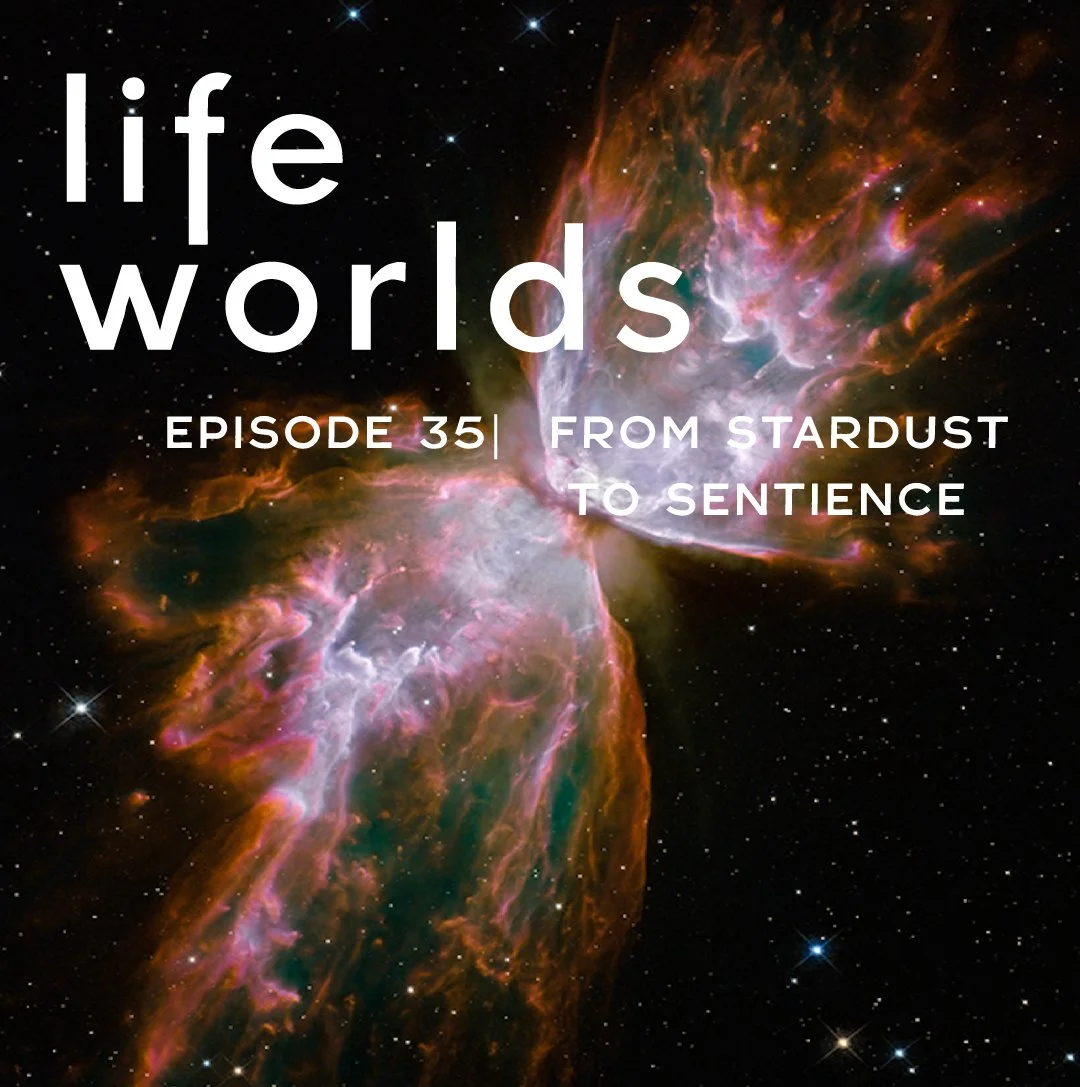
Cover Image: Hubble Space Telescope
YOU MAY ALSO LIKE

![[Full Length] Unexpected Agricultures — with Lyla June Johnston](https://images.squarespace-cdn.com/content/v1/61e5960411275129ba0c607d/1658128435444-KBCFLKI45Y754WXVUYCZ/Agriculture-Lyla.jpg)
![[Full Length] Unexpected Agricultures — with Michael Ableman](https://images.squarespace-cdn.com/content/v1/61e5960411275129ba0c607d/1658129338344-U3GK0WTQJL9YQU1DIPVK/Agriculture-Michael.jpg)